What Happens During a Comprehensive Eye Care Exam?
Many people think an eye exam is simply about updating a glasses prescription, but a comprehensive eye care exam is much more than that. These exams evaluate both your vision and your overall eye health, helping detect conditions before they begin affecting your eyesight. In fact, many serious eye diseases develop without noticeable symptoms, making regular exams one of the most important steps you can take to protect your vision.
Whether it's your first appointment or your annual visit, understanding what happens during a comprehensive eye care exam can help you feel confident and prepared.
1. A Review of Your Medical and Vision History
Your appointment begins with a conversation about your overall health and vision. Your eye doctor will ask about:
- Current vision concerns
- Medical conditions such as diabetes or high blood pressure
- Medications you're taking
- Family history of eye diseases
- Previous eye injuries or surgeries
- Whether you currently wear glasses or contact lenses
This information helps identify potential risk factors and guides the rest of your examination.
2. Visual Acuity Testing
One of the most familiar parts of an eye exam is reading letters on an eye chart. This simple test measures how clearly you can see at various distances and helps determine if your vision has changed since your last visit.
3. Determining Your Prescription
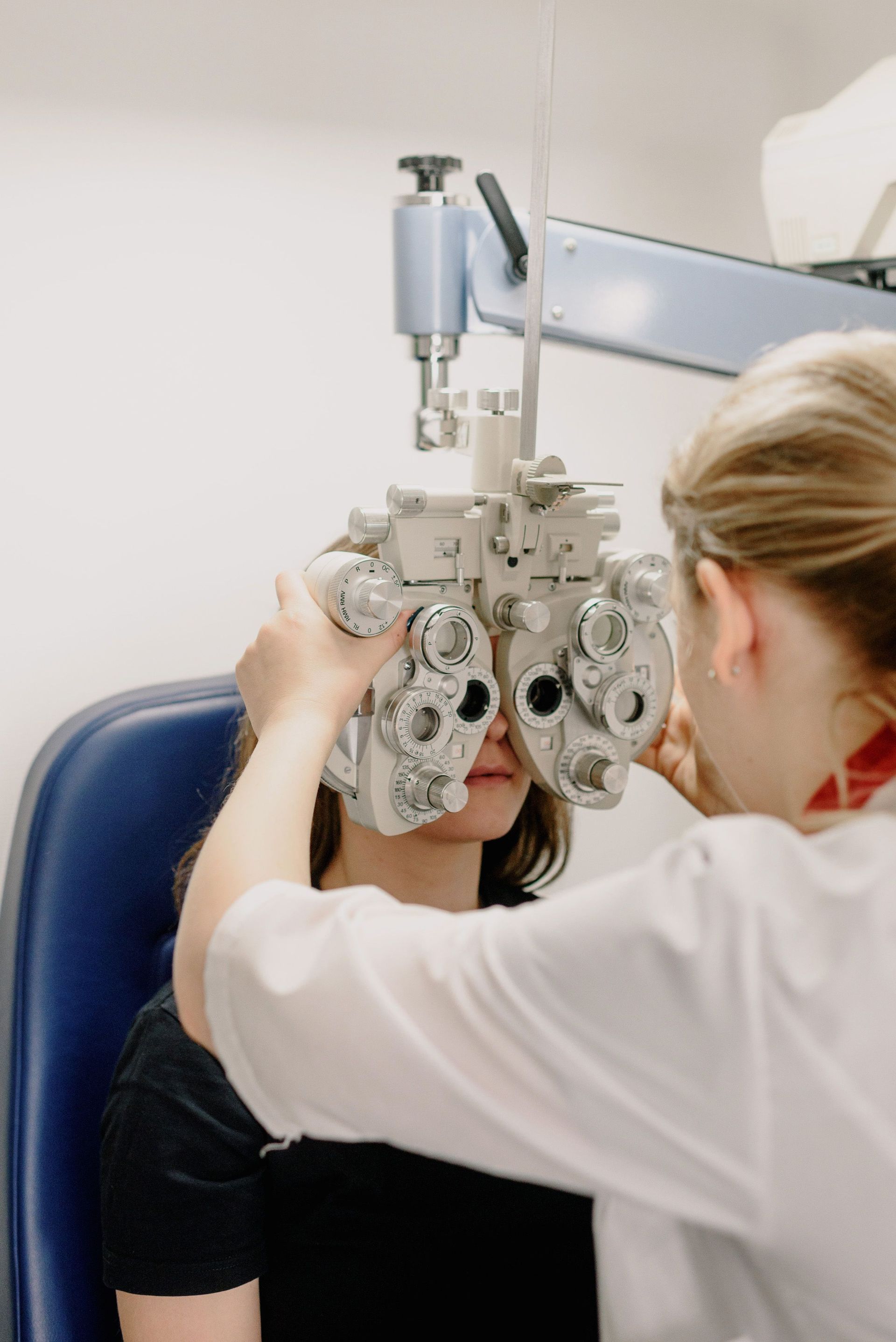
If you wear corrective lenses—or think you may need them—your doctor will perform a refraction test using a phoropter. You'll compare different lens options while reading an eye chart until the clearest prescription is identified.
This ensures you receive the most accurate prescription for glasses or contact lenses.
4. Checking Eye Alignment and Movement
Healthy vision depends on both eyes working together. During this portion of the exam, your ophthalmologist will evaluate:
- Eye muscle coordination
- Eye tracking
- Peripheral (side) vision
- Pupil response to light
These tests can reveal neurological or muscular issues that may require further evaluation.
5. Measuring Eye Pressure
One of the most important screenings during an eye exam is measuring intraocular pressure, often called a tonometry test.
Elevated eye pressure can be an early warning sign of glaucoma, a condition that often causes permanent vision loss if left untreated. Because glaucoma frequently develops without symptoms, routine screening is essential.
6. Examining the Front of the Eye
Using a specialized microscope called a slit lamp, your ophthalmologist carefully examines the structures at the front of your eye, including:
- Eyelids
- Cornea
- Iris
- Lens
This allows your doctor to identify concerns such as infections, dry eye, corneal injuries, cataracts, or other abnormalities.
7. Evaluating the Retina and Optic Nerve
To complete your comprehensive exam, your eyes may be dilated with special eye drops. Dilation allows your ophthalmologist to thoroughly examine the retina and optic nerve for signs of:
- Macular degeneration
- Diabetic eye disease
- Retinal tears
- Glaucoma damage
- Other retinal conditions
Although your vision may remain blurry and light-sensitive for several hours afterward, this portion of the exam provides invaluable information about your long-term eye health.
Why Annual Eye Exams Matter
Even if your vision seems perfectly fine, many eye diseases progress silently. Regular comprehensive eye exams allow your ophthalmologist to detect problems early, when treatment is often most effective.
Routine exams are especially important for adults over 40, individuals with diabetes, those with a family history of eye disease, or anyone experiencing changes in vision.
Protecting your eyesight today can help preserve your vision for years to come.
Schedule Your Comprehensive Eye Care Exam Today
At Seaborn M. Hunt III MD, patients throughout The Villages and Ocala, FL receive comprehensive eye care using advanced diagnostic technology in a comfortable, patient-focused environment. The practice offers thorough eye exams, cataract evaluations, glaucoma care, and personalized treatment plans designed to protect your long-term eye health.
Don't wait until vision problems appear. Contact us today to schedule your comprehensive eye care exam.